

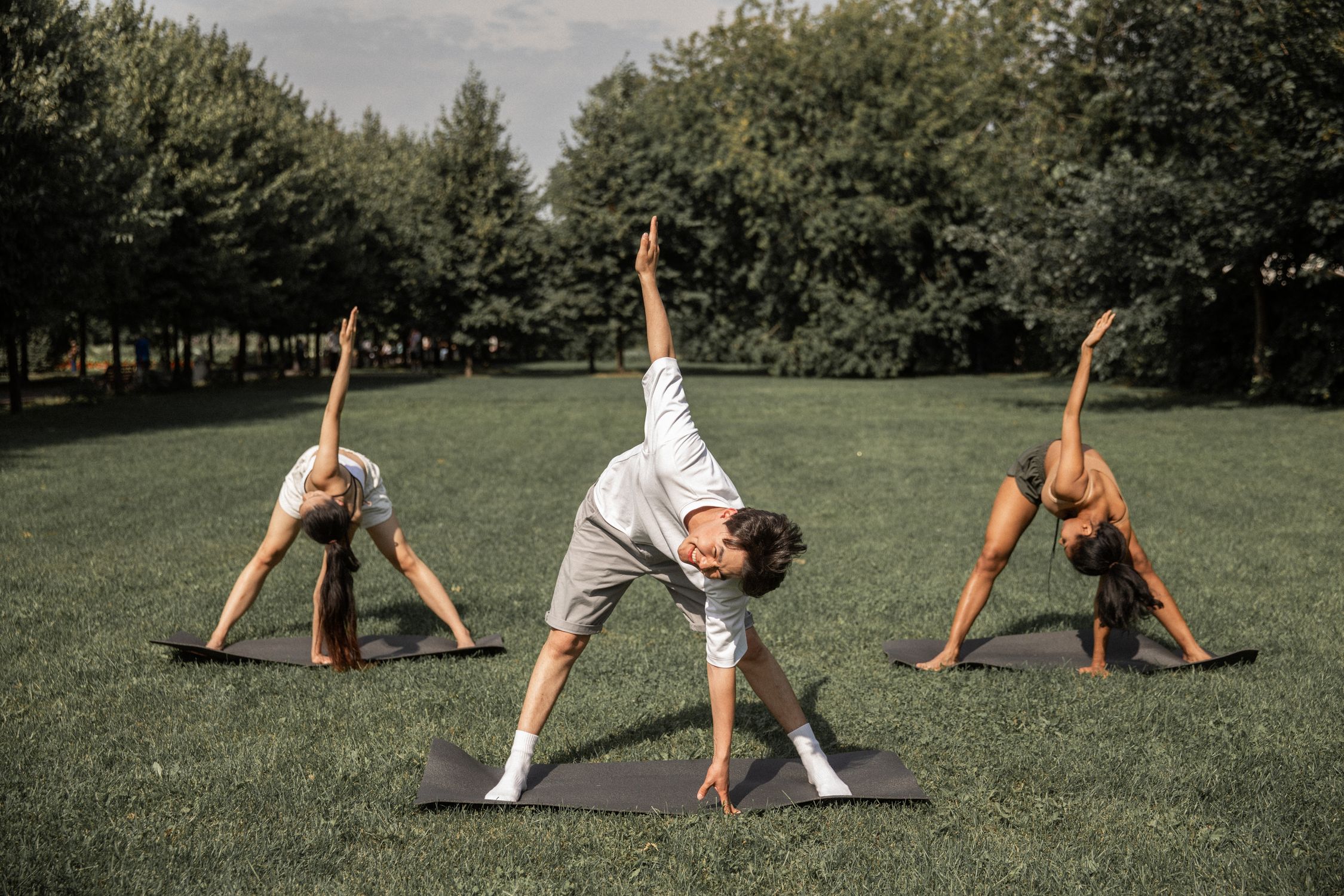
Today is International Yoga Day. I had written an extensive article for the very first Yoga Day in 2015 and thought, I would shorten the 2600 word-long piece and post the gist of it anew. The reason: I missed in the commentaries on the Yoga Day celebrations the most important goal of yoga, to unite or at least connect and make us familiar with our divine essence (Ayam Atma Brahma), which is the same in everyone.
Just when I started to shorten, I had the idea to ask Chat GPT to reduce it to around 600 words. I couldn’t believe it: within seconds my work was done. It would have taken me long, weighing what to leave and what to cut out. Of course, a lot is cut out, including personal interactions at the conference.
So, if you have time for the long version, the link is at the end.
Here is the short version
A Yogi Revives Yoga
The first International Yoga Day was celebrated on 21 June 2015 after Prime Minister Narendra Modi proposed it at the United Nations, where it received support from 177 countries. While yoga had become popular worldwide, it had long been neglected in India, partly due to the colonial-era tendency to view Western traditions as superior and Indian traditions as backward.
The person most responsible for restoring yoga’s prestige in modern India is Swami Ramdev. Through his tireless teaching tours and the establishment of Patanjali Yogpeeth near Haridwar—one of the world’s largest centers for yoga and Ayurveda—he brought yoga back into the mainstream. He trained thousands of teachers, reached millions through television, and inspired countless Indians to take pride in their own heritage.
Ramdev’s vision extends beyond physical exercise. He emphasizes that yoga is a complete way of life that promotes health, happiness, inner peace, and ultimately Self-realization. Drawing on the teachings of the Vedas, he explains that our true nature is not the limited individual but the Atman, which is one with Brahman, the universal reality. Yoga helps remove the illusion of separateness and enables us to experience this deeper truth.
At international conferences organized by Patanjali Yogpeeth, scientists, doctors, and yoga practitioners from around the world discussed yoga’s benefits. A recurring theme was the need to validate yoga scientifically. Many researchers argued that modern society trusts science above all else, and therefore yoga’s effects must be demonstrated through clinical studies.
Ramdev welcomes scientific research but points out that science is a work and progress but Ayurveda and yoga have benefited people for thousands of years. He is not opposed to modern medicine, but he questions the heavy dependence on costly drugs for illnesses that could often be prevented or improved through yoga and healthier lifestyles. His concern is especially for the poor, who frequently cannot afford expensive medical treatment.
To support research, Patanjali established a Yoga Research Foundation. Scientists from institutions such as Harvard and Oxford participated in studies examining yoga’s effects. Presentations at the conference highlighted encouraging results, including improvements in attention, mental performance, and even the treatment of conditions such as elephantiasis through simple breathing exercises, massage, and movement.
Another important topic was yoga’s remarkable growth in the West. Researchers noted that yoga had become a mainstream cultural phenomenon, widely practiced and praised. Yet many Western practitioners view yoga mainly as a tool for physical and mental well-being, often detached from its philosophical and spiritual roots.
Some Indian delegates expressed concern about this trend. They felt that yoga’s ethical principles and ultimate goal—Self-realization—were being overlooked. Questions were also raised about the commercialization of yoga. Ramdev strongly criticized attempts to patent yoga techniques or create marketable brands that ignore the tradition’s deeper purpose. The ancient rishis, he argued, offered this knowledge freely for the benefit of humanity.
Although Ramdev has critics, particularly regarding some of his claims about yoga’s healing powers, few dispute his immense contribution to yoga’s revival. Coming from a humble rural background, he built a movement that transformed public attitudes toward yoga and Ayurveda in a remarkably short time.
For Ramdev, yoga is not limited to postures and breathing techniques. It also includes knowledge (jnana), devotion (bhakti), and selfless action (karma), as taught in the Bhagavad Gita. Physical practices help purify the body and mind, but their highest purpose is to prepare individuals for a deeper realization of their true nature.
The modern world often values yoga primarily for fitness, stress reduction, and better health. While these benefits are real and important, Ramdev believes they are only the beginning. The greatest potential of yoga lies in helping human beings discover the divine reality within themselves and recognize their unity with all existence. Even so, he remains optimistic: those who begin yoga merely for health may gradually become better, more balanced, and more compassionate human beings—and eventually discover its deeper dimensions.
here is the longer version: https://mariawirth.com/a-yogi-revives-yoga-in-india/
if you like my writing, consider reading my books: two books in English and one in Hindi. link to them on amazon
https://www.amazon.in/s?k=maria+wirth&crid=29H80IZH8GKLM
